Activating STAR Talent Across Regions
STAR Mobility Compass
The STAR Mobility Compass shows how regional leaders can expand job pathways, improve wages, and ensure access to emerging work so more workers who are Skilled Through Alternative Routes can move into better-paying jobs.

The U.S. labor market is changing quickly, raising urgent questions about talent pipelines, economic mobility, and how regions can connect workers to good-paying jobs. For the more than 70 million workers who are Skilled Through Alternative Routes, or STARs, these shifts reveal both persistent barriers and significant opportunity.
STARs build skills through community college, partial college, certifications, military service, apprenticeships, and learning on the job rather than through a bachelor’s degree. They make up more than half of the workforce and reflect the full diversity of the country across race, ethnicity, gender, and geography.
This report applies the STAR Mobility Compass to regional labor markets and shows how local leaders can take practical, place-based action to improve mobility for STARs while strengthening their own talent ecosystems.

The STAR Mobility Compass:
Three Ways to Move STARs to Higher Wages
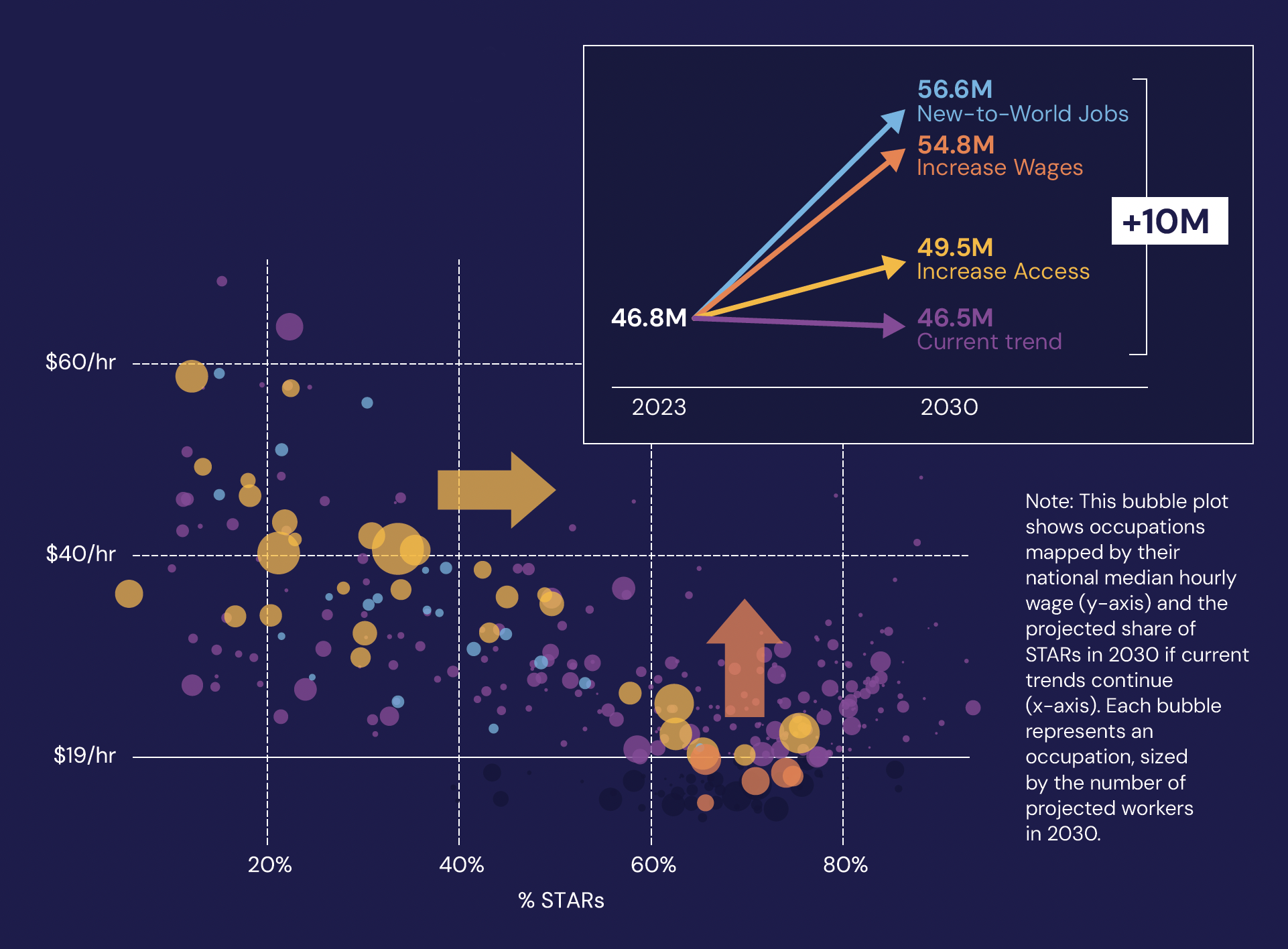
The STAR Mobility Compass is a future-oriented framework for improving mobility at scale. It shows how three interventions can collectively move 10 million STARs into better-paying jobs by 2030.
Increase access
Broaden skills-based job pathways so STARs can be hired into good-paying roles where they already have relevant skills.
Increase wages
Raise pay in essential low-wage occupations where STARs are overrepresented and where compensation often fails to reflect workers’ skills.
Ensure access to new-to-world jobs
Design emerging jobs with skills-first practices from the start so STARs can access better-paying opportunities created by economic and technological change.
What This Report Shows
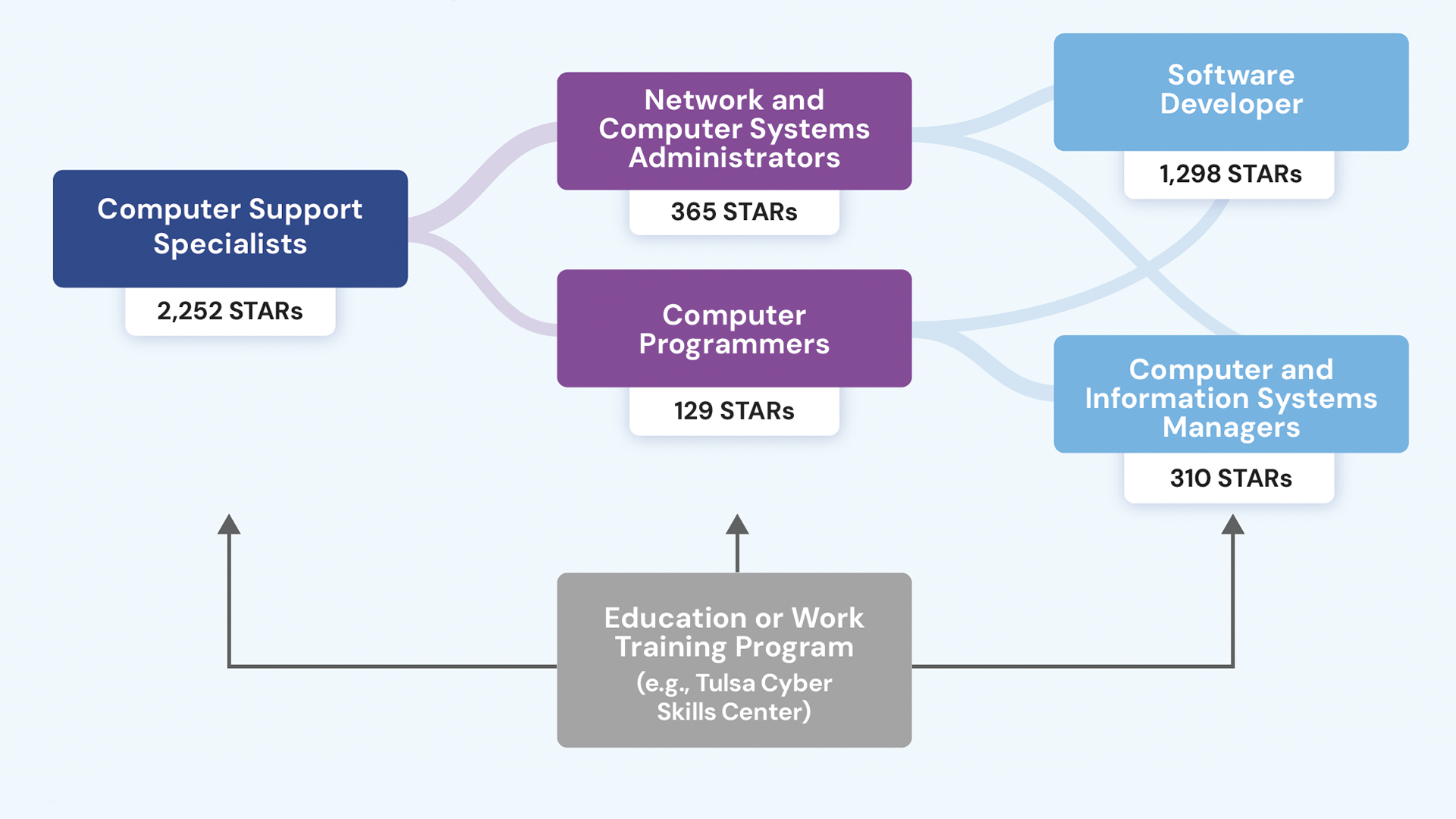
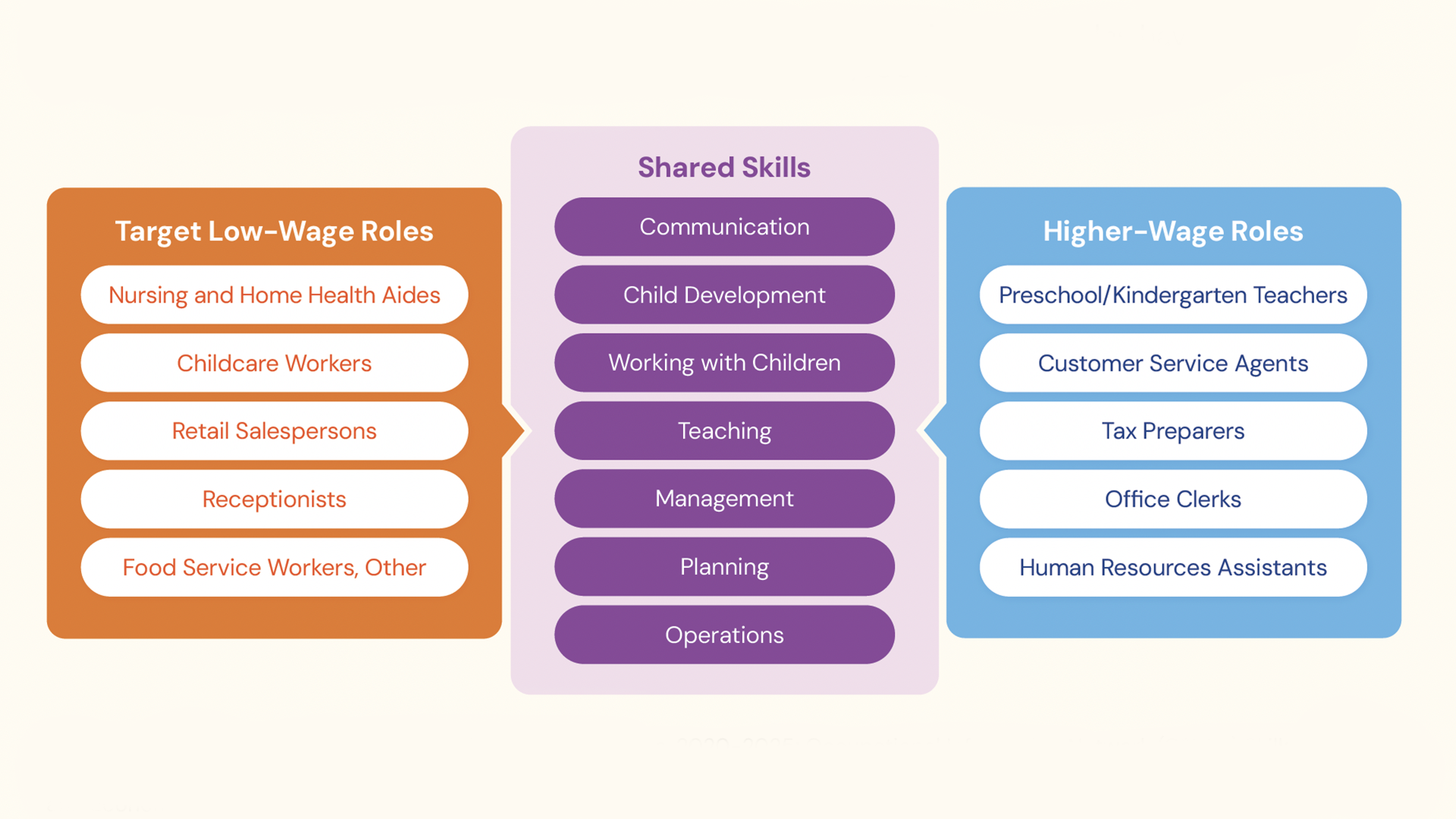
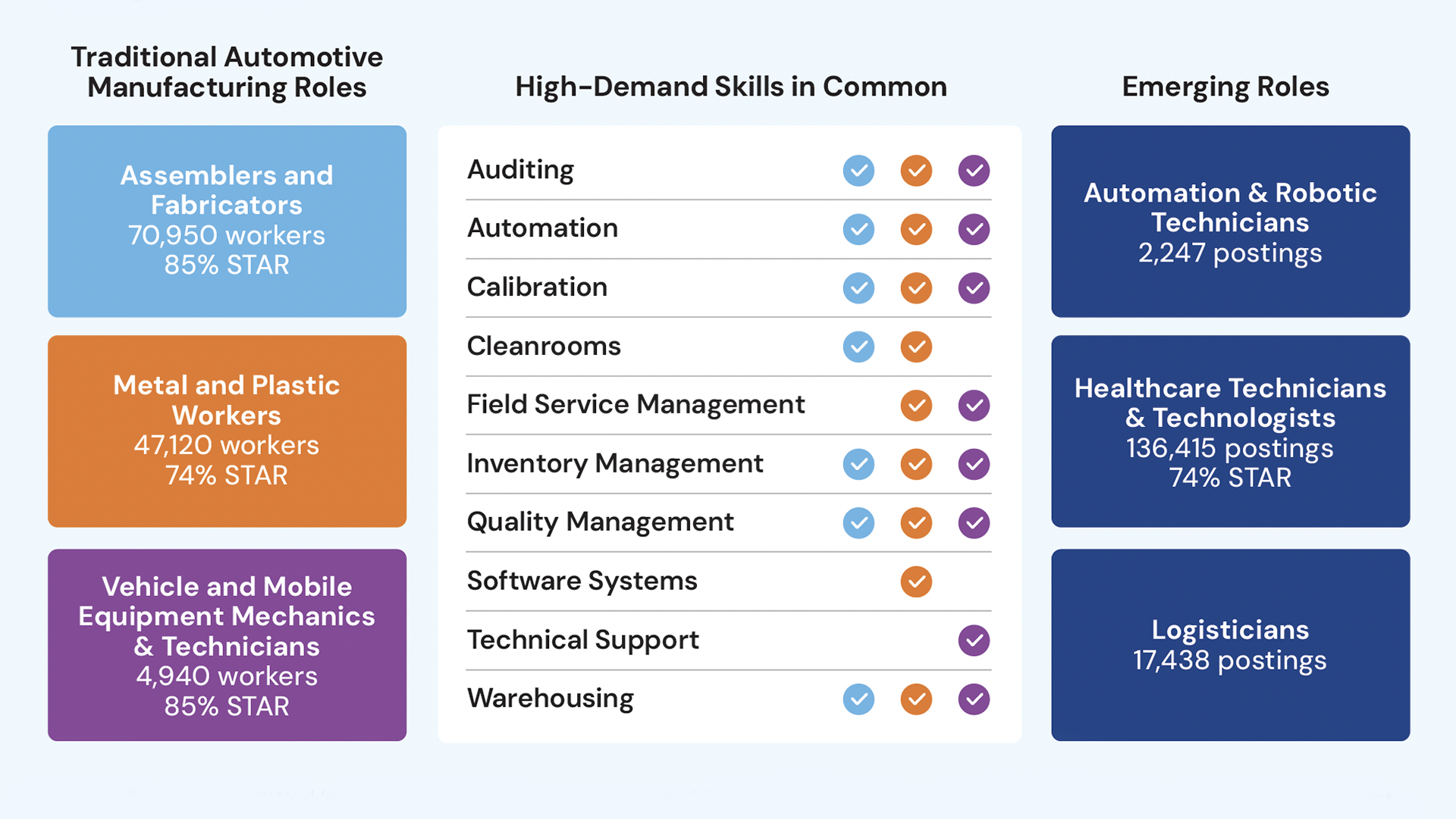
This report spotlights how three distinct regions each demonstrate one of the STAR Mobility Compass’s three interventions:
Why Regional Action Matters Now
This is a critical moment for action. The norms set today will shape whether future job growth expands access to opportunity or recreates the paper ceiling in new forms.
Over the past five years, the movement to Tear the Paper Ceiling has broadened opportunities for STARs and expanded employers’ access to talent. The next step is more ambitious: building skills-first regional labor markets that improve match quality, reduce turnover, and help workers continue building skills over time.
Everyone has a role in building a thriving regional labor market
Download the Report
Regional leaders do not need to start from scratch. They can act now to build a more inclusive, resilient, and upwardly mobile economy by strengthening skills-based pathways for all workers.


