New York: Building a healthcare workforce that lasts
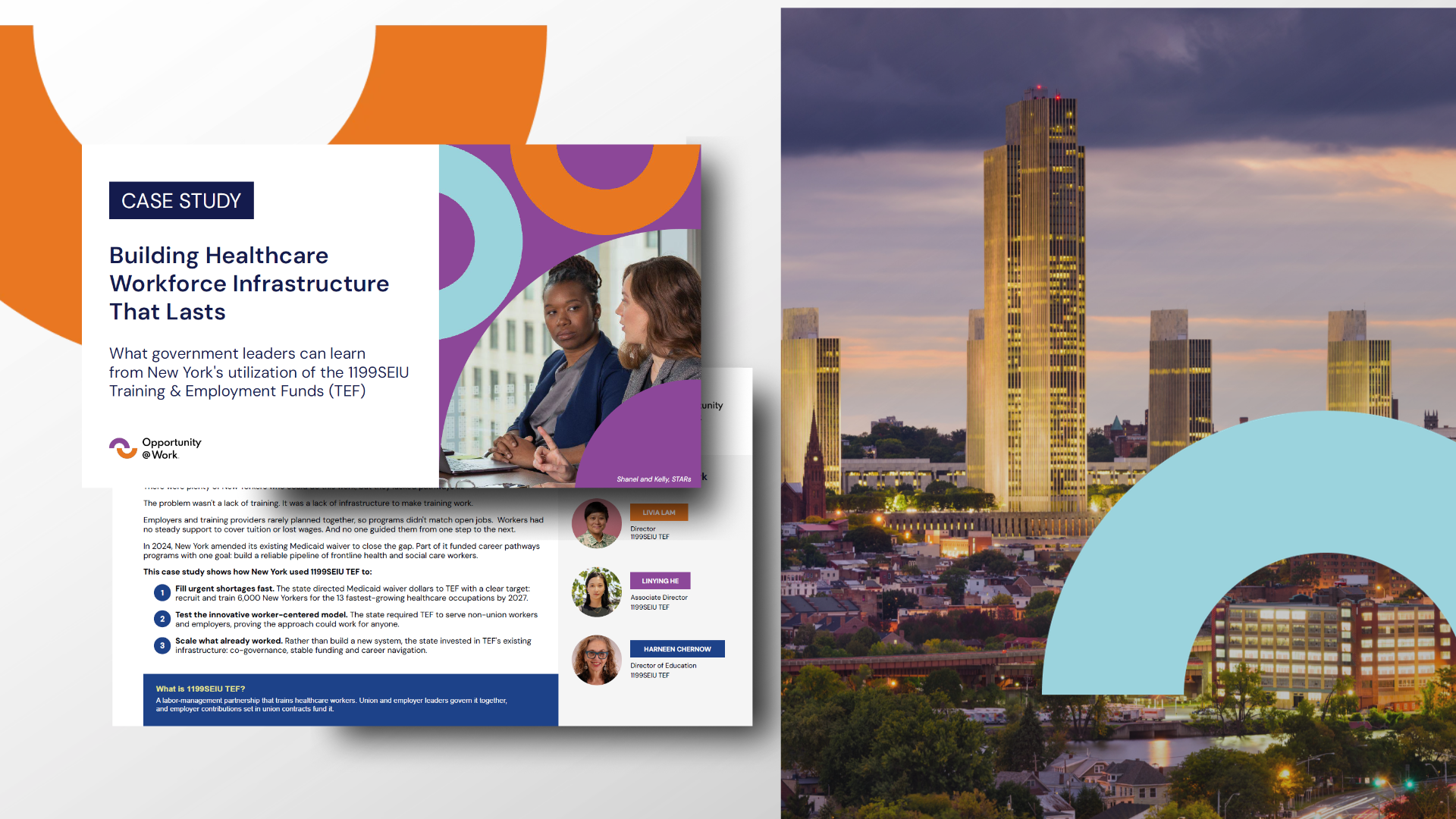
How New York used Medicaid waiver dollars and the 1199SEIU Training & Employment Funds (TEF) to build a healthcare workforce pipeline that outlasts any single grant.
The challenge
Healthcare employers across New York couldn’t fill frontline roles, especially at safety-net providers. Training existed, but the system around it didn’t:
- Programs didn’t match open jobs
- Workers had no steady help with costs
- No one guided them from step to step
The shift
In 2024, New York chose not to build new programs. The state invested in infrastructure that already worked. TEF’s model rests on three elements:
- Shared governance: a 50/50 labor-management board
- Stable funding: employer payroll contributions, not annual grants
- Whole-journey navigation: support from enrollment through job placement
Remove one element and the other two weaken.
The results
- New York directed over $600M to workforce intermediaries, including TEF
- More than 8,000 New Yorkers enrolled across 13 fast-growing healthcare occupations
- Over 6,000 non-union community participants showed that the model works outside collective bargaining
What you’ll learn
- Why co-governance gives workers the security to take career risks
- How payroll contributions protect funding when political cycles change
- Why paying participation costs drives completion
- How at-risk tracking catches people before they drop out
- Six policy moves to copy the model in your state
Ready to build workforce infrastructure that lasts?
Most states fund more training. New York funded the system that turns training into careers. Download the case study to see how state leaders, employers, and workforce partners can apply the TEF model to their own talent shortages.