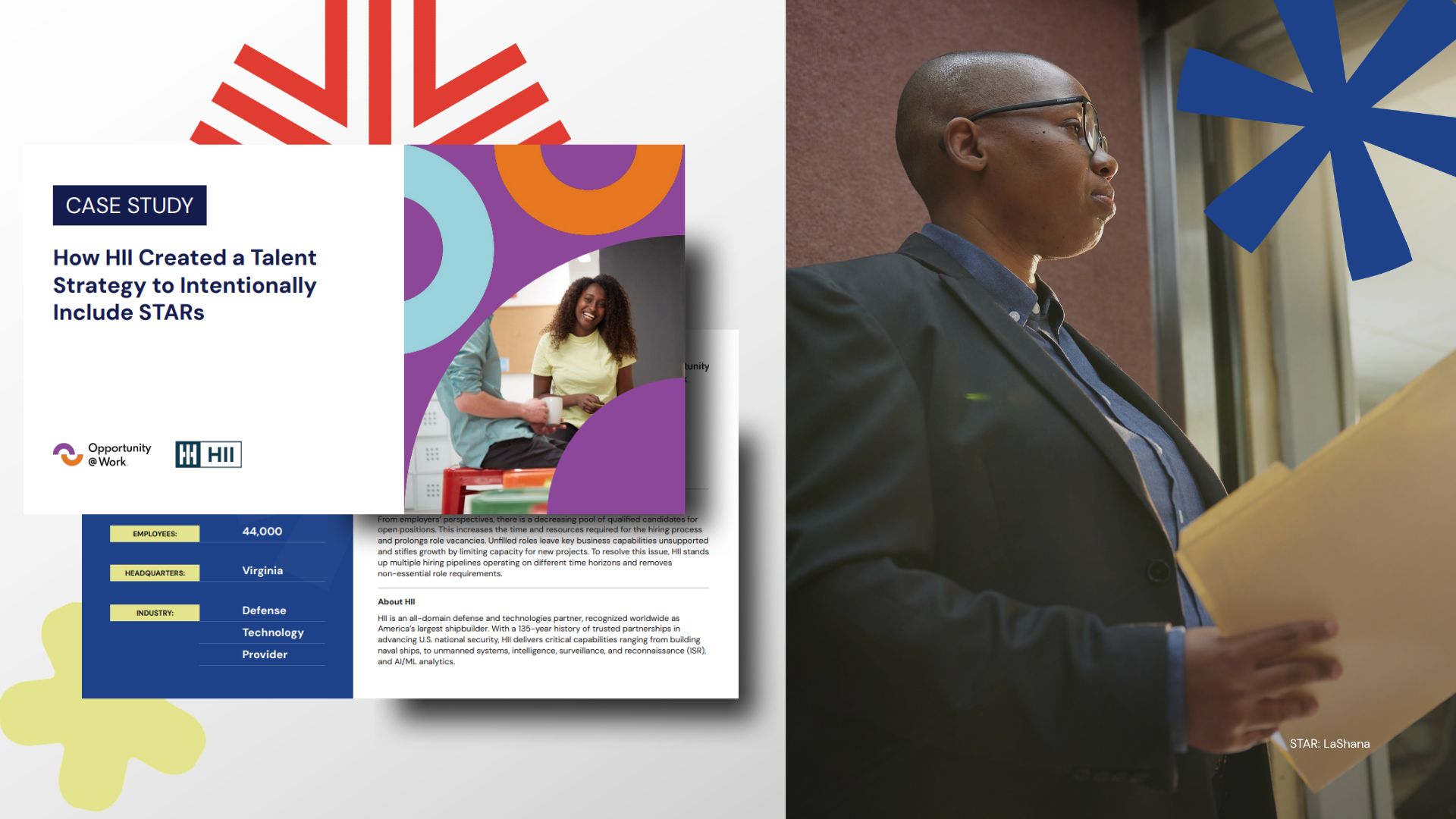
How HII Created a Talent Strategy to Intentionally Include STARs
A multi-horizon talent strategy opens up critical defense technology roles to a broader workforce.
Key Takeaways:
- Facing prolonged vacancies and high competition for talent, HII restructured its hiring practices to widen access to talent.
- The company began by redesigning a single role—intelligence analyst—to remove non-essential degree requirements.
- A cross-functional team reviewed job criteria, prioritized experience over credentials, and piloted new hiring metrics.
- The effort expanded into broader talent pipelines, including apprenticeships, internships, and internal mobility programs.
- HII’s approach balances short-term wins with long-term workforce development, offering a model for other employers.
Case Summary:
As talent shortages threatened growth and delivery timelines, HII—America’s largest shipbuilder and a leading defense technology provider—recognized that traditional hiring practices were limiting its reach. To build a more resilient workforce, the company launched a multi-horizon strategy to create inclusive, sustainable talent pipelines.
HII started small, piloting a redesign of its intelligence analyst role by replacing degree requirements with four years of relevant experience. A hiring redesign committee—including HR, hiring managers, and communications leaders—worked together to identify and remove gating criteria that didn’t reflect the actual needs of the job. The result was a more accessible pathway for STARs (workers Skilled Through Alternative Routes) with military service, training, or on-the-job learning.
From there, the company built on early wins by expanding internal mobility, launching new apprenticeship programs, and partnering with states on broader skills-based initiatives. By aligning hiring practices with business goals and workforce realities, HII demonstrated how employers can unlock new talent sources while strengthening operational capacity.
Talent shortages don't have to stall your growth
Learn how HII removed the barriers that were keeping qualified talent out and what that shift made possible.